

If you’ve been holding off on upgrading to a bigger or better home because you didn’t want to sell in a falling market, or because you couldn’t stomach the thought of selling, renting, and moving twice — I want to talk you through an option that solves both problems at once: a Bridging Loan.
What’s actually happening to house prices right now
The “boom or bust” headlines don’t tell the full story in 2026. What we’re actually seeing is a market that’s moderating, not collapsing.
- Nationally, home value growth has slowed to some of its softest monthly paces in over a year, even though annual growth is still sitting in the high single digits to double digits in many cities.
- Sydney and Melbourne have seen small monthly dips at various points this year — nothing dramatic, but a clear sign that runaway growth has cooled.
- Perth is a different story again. Growth here is easing off its blistering 2024–2025 pace, but the market is still edging higher — just at a much steadier, more sustainable rate than the 15–20%+ annual gains we saw through the recent boom.
In other words: this isn’t a market where you need to panic-sell before prices “fall off a cliff,” and it isn’t a market moving so fast that you’ll miss out if you don’t buy tomorrow. It’s a market that’s finally given buyers and upgraders a bit of breathing room.
That breathing room is exactly why upgrader activity tends to pick up in a cooling market — but it creates a very practical problem.
The upgrader’s dilemma
If you own your current home and want to move into something bigger, better located, or more suited to your family, you’re usually faced with an uncomfortable choice:
- Sell first, then buy — you know your budget, but you might end up in temporary rental, moving twice, and rushing into a purchase.
- Buy first, then sell — you get to secure the right property without the rush, but now you’re carrying two mortgages until your old place sells.
This is where a bridging loan comes in — it’s designed specifically to solve problem #2.
How a bridging loan works
A bridging loan lets you draw on the equity in your current home to fund the purchase of your new one, before your existing property has sold. You get to move into your new home first, then sell your old one at a normal, unpressured pace, and use the sale proceeds to pay down the bridging debt.
Depending on the new home purchase price, you could potentially do it without forking out any cash from your pocket
Here’s a simple way to picture it:
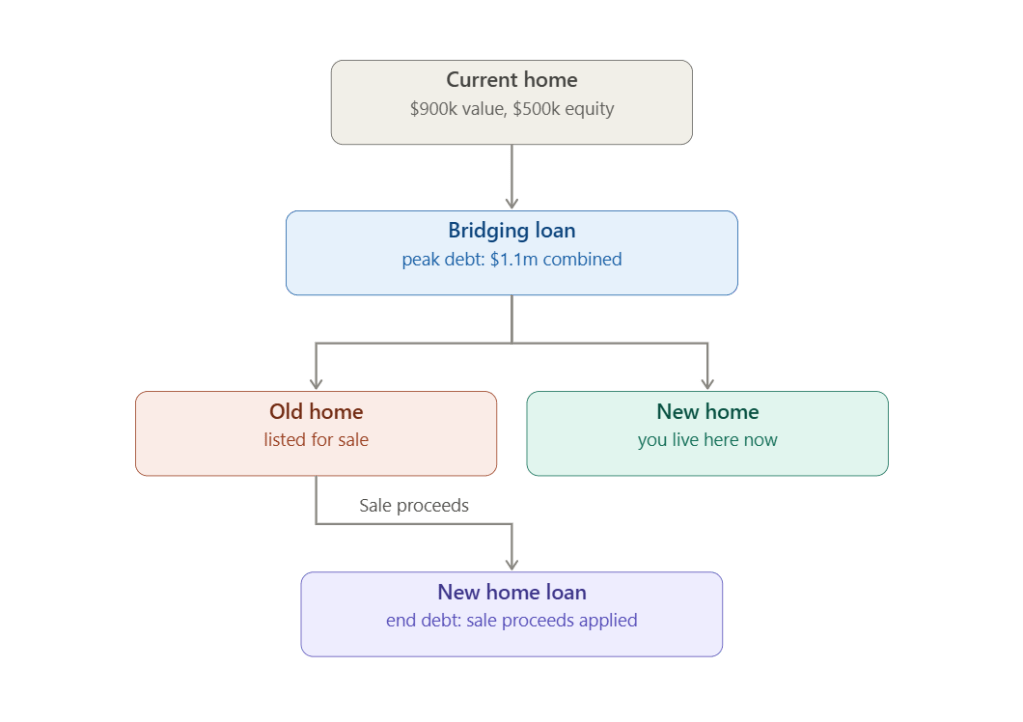
The key concept lenders use is peak debt — the total amount you owe while you temporarily hold both properties — versus end debt, which is what’s left once your old home sells and the proceeds are applied. Your serviceability is usually assessed on the end debt (assuming a sale within a set timeframe), not the full peak debt, which is what makes this achievable for a lot of upgraders who’d otherwise be told “you can’t afford two mortgages.”
What you need to know before going down this path
- It’s usually interest-only and short-term. Most lenders cap bridging terms at 6–12 months, on the expectation your old home will sell within that window.
- You’ll need enough equity. Lenders want comfort that your old home will sell for enough to bring your debt back down to a serviceable level — a conservative valuation matters here.
- Selling costs get factored in. Agent commission, marketing, and settlement costs on your old home are typically deducted from the expected sale proceeds when the lender calculates your end debt.
- Rates can be a little higher. Bridging finance often sits at a slightly elevated rate compared to a standard home loan, reflecting the short-term and higher-risk nature of the facility.
- A realistic sale price is everything. This only works smoothly if your old home actually sells at or near the number used in the calculations — which is exactly why getting a proper appraisal (not just a guess) before you commit is so important.
Why a cooling, stabilising market suits this strategy
In a market moving in fast, unpredictable leaps, bridging finance can feel risky — you might commit to a peak debt based on a valuation that’s stale within weeks. In a steadier, more stabilising market like the one we’re in now, valuations hold up better over a 6–12 month bridging window, which is exactly the kind of predictability lenders — and you — want to see before taking this on.
Is a bridging loan right for you?
If any of the below sound like you, it’s worth a conversation:
- You’ve found (or expect to find) your next home before your current one is even listed
- You don’t want the stress and cost of moving twice, or renting in between
- You have solid equity in your current home
- You’re confident your home will sell within a reasonable timeframe at a realistic price
Every lender structures bridging finance a little differently — some cap the bridging term tightly, some are more flexible on how end debt is calculated, and serviceability assessments vary. This is very much a “get the numbers modelled properly before you commit” kind of decision.
Let’s talk it through
If upgrading has been on your mind but the “sell first or buy first” dilemma has kept you stuck, get in touch and I’ll run the numbers on what a bridging loan could look like for your situation — including what peak debt and end debt would realistically be based on your equity and the market conditions in your area and what is your future new dream home repayment looks like.
This article contains general information only and does not take into account your personal financial situation, needs, or objectives. It does not constitute credit advice or a recommendation regarding any credit product. Before acting on any information here, you should consider its appropriateness to your circumstances and seek personalised advice from a licensed financial adviser or credit representative.


